CMMS with AI: From Data Entry Tool to Intelligent Maintenance Partner
Most industrial plants operate maintenance the same way they did twenty years ago. Technicians fill out digital forms. Data sits in spreadsheets. Decisions wait for quarterly reviews. The only difference from paper-based systems is the interface.
Computerized Maintenance Management Systems (CMMS) were supposed to change this. They did—but not as much as we thought.
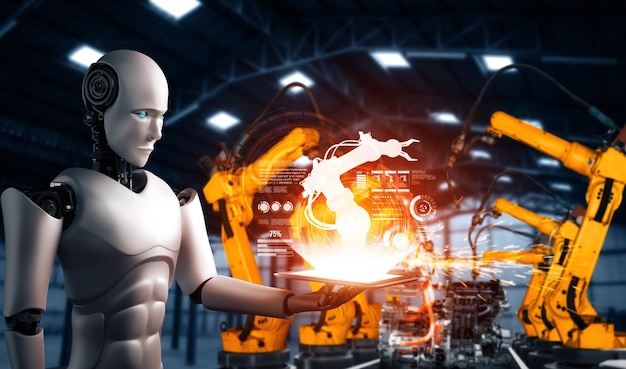
Until now. AI-powered CMMS platforms are fundamentally changing what maintenance means. Instead of a tool that records what happened, CMMS is becoming a system that predicts what will happen, recommends what should happen, and learns from every decision made.
The Three Eras of CMMS Evolution
Understanding where your maintenance operation stands requires understanding how CMMS has evolved. Not all progress is linear—and most plants are still stuck in the past.
Era 1: The Digital Filing Cabinet
CMMS became a glorified data entry system. Technicians logged work orders. The system stored history. Maintenance leaders could pull reports—mostly to explain what went wrong after it happened. No prediction. No optimization. Just better organized chaos.
Era 2: The Workflow Engine
Integration and automation arrived. CMMS could trigger work orders automatically based on time intervals. It could route tasks to the right technician. It could track inventory in sync with maintenance activities. Progress—but still reactive. The system optimized what humans told it to do, not what actually needed doing.
Era 3: The Intelligent Partner
AI changes the game. CMMS now learns from patterns nobody noticed. It diagnoses problems before they become failures. It recommends the precise maintenance action needed, not just "check the bearing." It predicts the optimal time to act. It gets smarter with every decision. Most plants haven't reached this era yet.
The question isn't whether to upgrade to AI-powered CMMS. It's whether you'll do it before your competition does.
Where is your operation today? Most plants are still transitioning from Era 1 to Era 2. Era 3 leaders are capturing exponential competitive advantage.
What Changes When AI Enters the Picture
The transition from traditional CMMS to AI-powered CMMS isn't an upgrade. It's a fundamental shift in what maintenance can accomplish. Let's examine the specific capabilities that separate the eras.
Notice the pattern: Traditional CMMS reacts to what happened. AI-powered CMMS anticipates what will happen. The difference compounds over time.
How AI Compounds Your Maintenance ROI
The financial case for AI-powered CMMS isn't just better—it's fundamentally different. Traditional CMMS delivers linear improvements. AI delivers exponential returns.
The exponential curve reflects how AI improves with more data. Year 1 establishes baselines. By Year 4, the system operates autonomously, continuously optimizing without human intervention.
Making the Transition to Intelligent Maintenance
Moving from traditional CMMS to AI-powered systems doesn't require replacing your entire maintenance operation overnight. The transition happens in phases, with real value at each stage.
Phase 1: Data Integration (Months 1-3)
Connect your existing systems. Integrate IoT sensors from equipment. Stream historical maintenance data into the AI platform. The system begins learning patterns from real operations. No major process changes yet—just data flowing in new directions.
Phase 2: Pattern Recognition (Months 4-6)
The AI identifies what actually correlates with failures. Temperature patterns. Vibration signatures. Time intervals. Component interactions. Patterns that were invisible in spreadsheets become obvious. Technicians start receiving actionable insights instead of raw alerts.
Phase 3: Predictive Actions (Months 7-12)
The system shifts from "here's what might happen" to "here's exactly what to do." Maintenance teams stop reacting and start preventing. Work orders appear days before failure would occur. Inventory is positioned exactly when needed. Scheduling optimizes around both equipment condition and crew availability.
Phase 4: Autonomous Optimization (Ongoing)
After the first year, the AI operates with minimal human direction. It learns from every decision. Process improvements implement automatically. The system becomes self-improving—continuously refining its own recommendations based on actual outcomes.
The Common Obstacles (And How to Overcome Them)
Moving to AI-powered CMMS isn't frictionless. Here are the challenges teams encounter and the solutions that work:
Data Quality Concerns
Traditional CMMS often has messy data—incomplete work orders, inconsistent equipment coding, missing details. AI amplifies data quality issues. Solution: Start with data cleansing. Most organizations can achieve 85% data quality in the first 30 days by focusing on the 20% of fields that matter most.
Technician Resistance
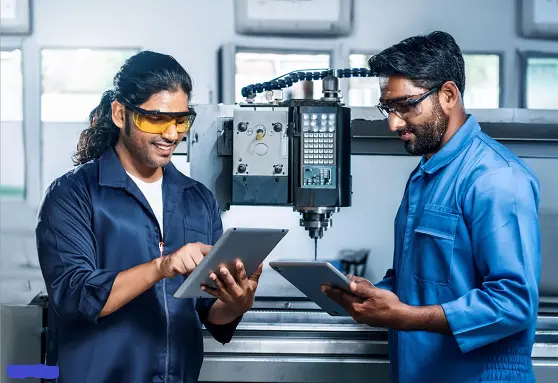
Field teams worry about being "replaced" by AI. In reality, AI takes over tedious diagnosis and scheduling, freeing technicians for higher-value work. Solution: Reframe the transition as "augmentation, not replacement." Show how AI makes their jobs easier, not threatened.
Integration Complexity
AI-powered CMMS needs to connect with sensors, inventory systems, and scheduling tools. Integration can feel overwhelming. Solution: Start with your top 3 pain points. Don't try to connect everything at once. Phased integration actually delivers faster ROI than big-bang approaches.
Proof-of-Value Timeline
Executive teams expect immediate results. AI-powered CMMS shows small wins in month one, but exponential gains appear in months 4-6. Solution: Track leading indicators (data quality, integration completeness, early pattern identification) alongside traditional metrics.
Frequently Asked Questions
How much does an AI-powered CMMS cost compared to traditional CMMS?
Related Articles
Ready to Move Beyond Data Entry?
The transition from traditional CMMS to intelligent maintenance isn't a future consideration—it's a present advantage. Organizations moving now are capturing exponential competitive gains while their competitors remain stuck in Era 1.
Discover how Dovient's AI-powered CMMS transforms maintenance operations into intelligent, self-improving systems.
Explore Intelligent MaintenanceThe Era You're In Defines Your Future
Three maintenance eras exist today. Most plants operate in Era 1 or early Era 2. The leaders—the organizations seeing 35% reduction in downtime and 4x faster ROI—have entered Era 3. They're not just managing maintenance differently. They've transformed it from a cost center into a competitive advantage.
Your CMMS isn't just software. It's the foundation of how your operation prevents failures, optimizes resources, and scales growth. The question isn't whether AI will change maintenance. It already is. The question is whether you'll lead that change or follow it.
The future of maintenance is intelligent, predictive, and continuously improving. The question is: which era will your operation enter first?
Ready to reduce downtime by up to 30%?
See how Dovient's AI-powered CMMS helps manufacturing plants cut MTTR, boost first-time fix rates, and build a smarter maintenance operation.