
What we monitor
The assets that determine mission readiness
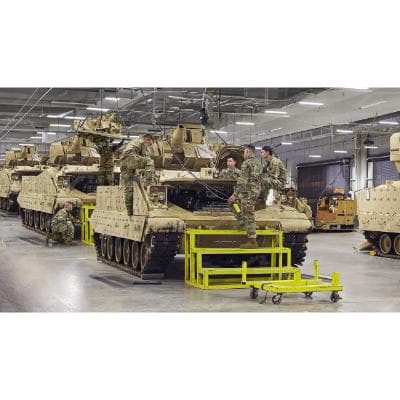
Vehicle Fleets
Tactical and support vehicles across installations. Readiness scoring, condition tracking, and parts forecasting for deployment cycles.

Aircraft Systems
Fixed-wing and rotary aircraft maintenance. Avionics diagnostics, airframe inspections, and flight-hour tracking.
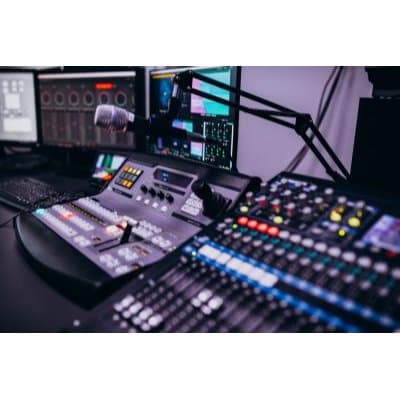
Communications Equipment
Radios, satellite systems, and network infrastructure. Uptime monitoring, preventive maintenance, and spare parts management.
Sound familiar?
Mission readiness is non-negotiable
Equipment must be ready when the mission calls. Reactive maintenance creates readiness gaps that can't be explained away. Every unplanned repair reduces the units available for deployment.
Security requirements are absolute
Maintenance systems must operate within classified environments. Cloud-based solutions, external APIs, and vendor-managed platforms are not an option for sensitive operations.
Remote and austere environments
Forward-deployed units and remote installations can't wait for parts or specialists. Maintenance teams need offline-capable tools and guided procedures that work without connectivity.
How Dovient works
An AI copilot built for classified environments, MIL-STD compliance, and operational readiness
Dovient deploys on-premise within your security perimeter. The AI agents learn your fleet's patterns and proactively manage readiness without external dependencies.
Fleet readiness tracking and operational availability
Every vehicle, aircraft, and system is scored for readiness in real-time. Commanders see operational availability across all units without waiting for manual reports.
Readiness scores calculated in real-time across all units.
Secure, offline-first deployment
Air-gapped installation with no cloud dependency. The system operates fully within your security perimeter, meeting classified environment requirements.
Works in air-gapped, classified environments.
MIL-STD compliant maintenance documentation
Maintenance records, inspection logs, and work orders are generated to MIL-STD specifications automatically. No manual transcription required.
MIL-STD documentation generated automatically.
Parts forecasting for remote and forward-deployed units
The system predicts parts demand based on usage patterns and deployment cycles. Pre-staging recommendations ensure parts are available when and where they're needed.
Parts demand predicted based on usage and deployment cycles.
Outcomes
What changes in your first 90 days
Fleet readiness calculated manually from spreadsheets
Fleet readiness scores calculated in real-time across all units
Maintenance records transcribed to MIL-STD format by hand
Maintenance records generated to MIL-STD spec automatically
Maintenance tools require network connectivity
Offline-capable system works in austere field conditions
Parts ordered reactively when something breaks
Parts demand predicted based on usage patterns and deployment cycles