
Hood cleaning and fire suppression inspections on schedule
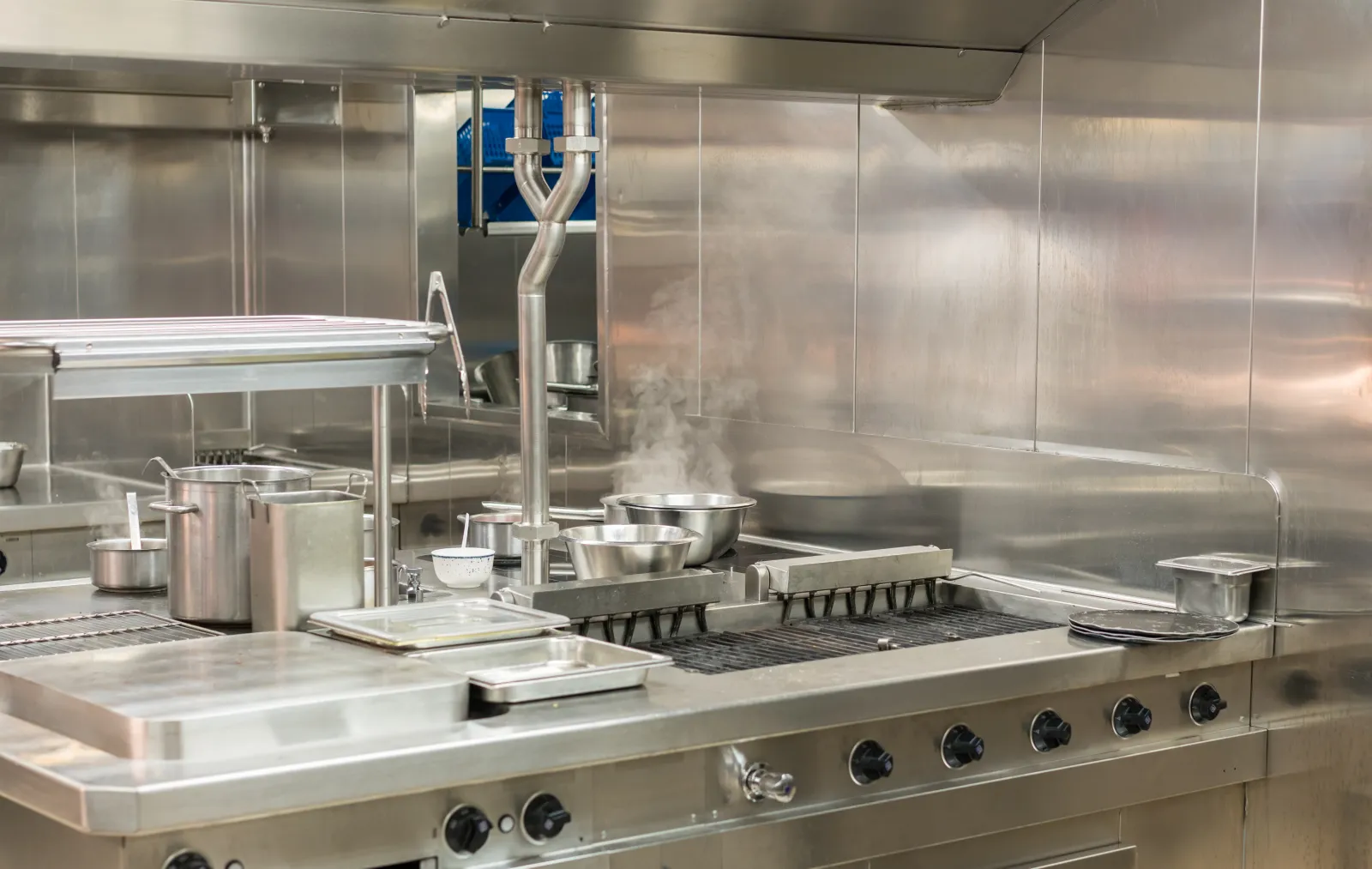
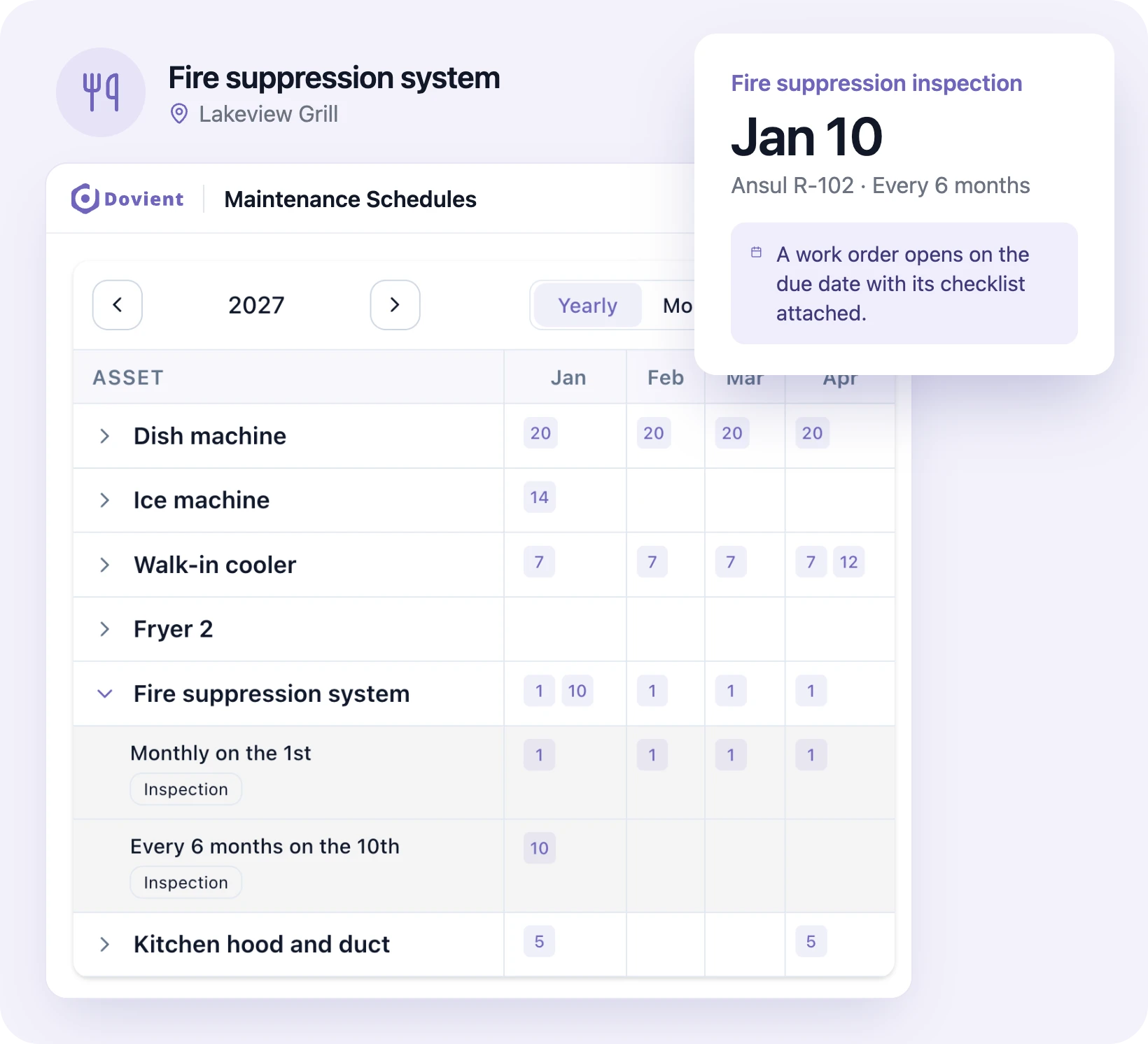
NFPA 96 sets how often the hood, ducts and fan are inspected and cleaned by cooking volume: quarterly for high-volume kitchens such as charbroil or wok cooking, every six months for moderate volume, monthly for solid fuel. The wet chemical suppression system needs an inspection by a trained technician every six months (NFPA 17A). Each one is a schedule assigned to the kitchen manager, and the contractor's service report and a photo of the tag are attached to the work order with the charge.
Walk-in cooler and freezer maintenance
Each walk-in gets a monthly checklist on the phone: condenser coil clean, door gaskets and hinges, strip curtain, evaporator drain line clear, freezer door heater working. The opening cook can also do a daily check, typing the walk-in temperature and marking it pass if it's at 41F or below, the FDA Food Code limit for cold holding. A fail gets a photo, and the manager opens a work order and calls the refrigeration contractor.
Walk-in cooler and freezer maintenance checklist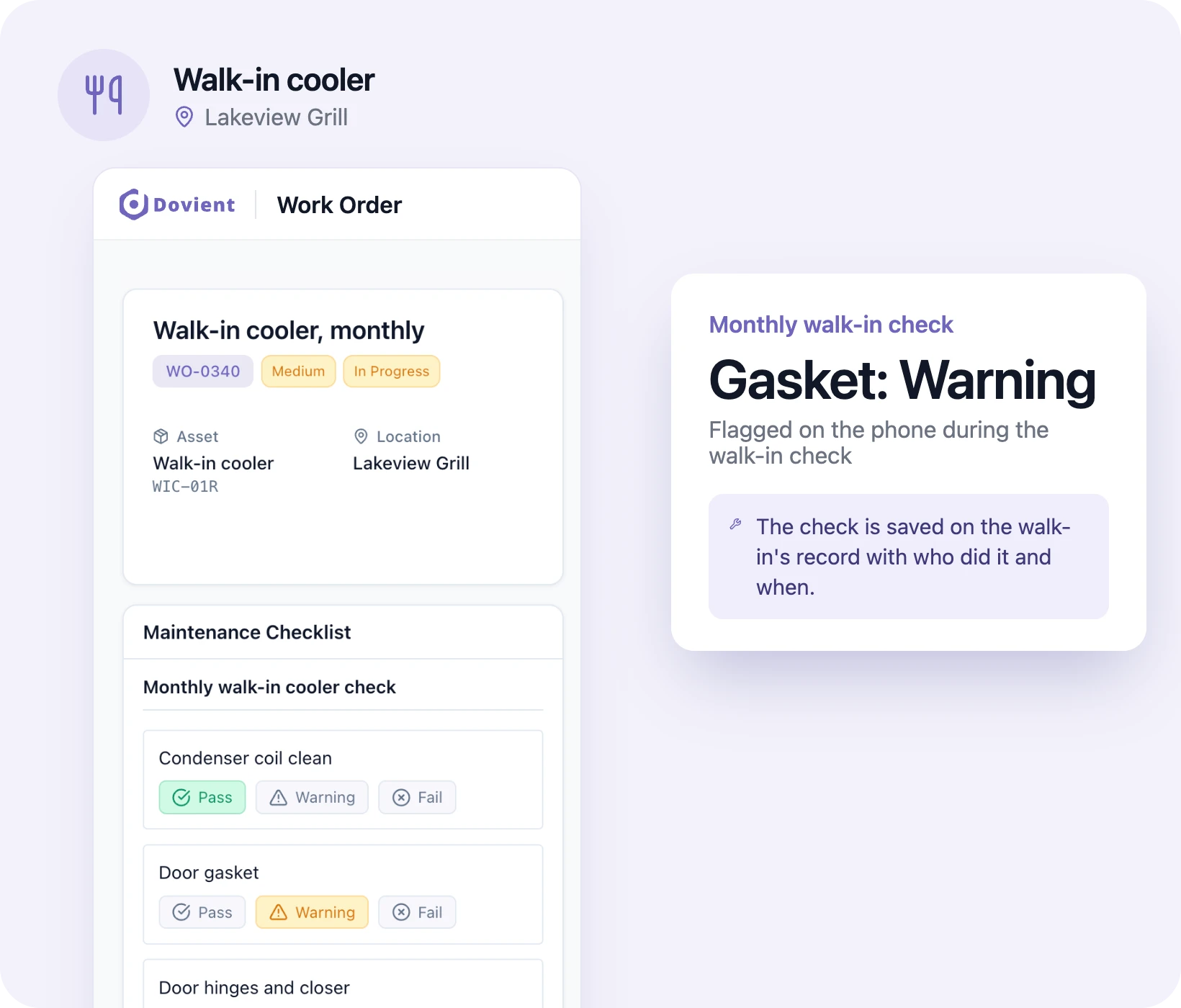
Every repair and contractor visit in one list
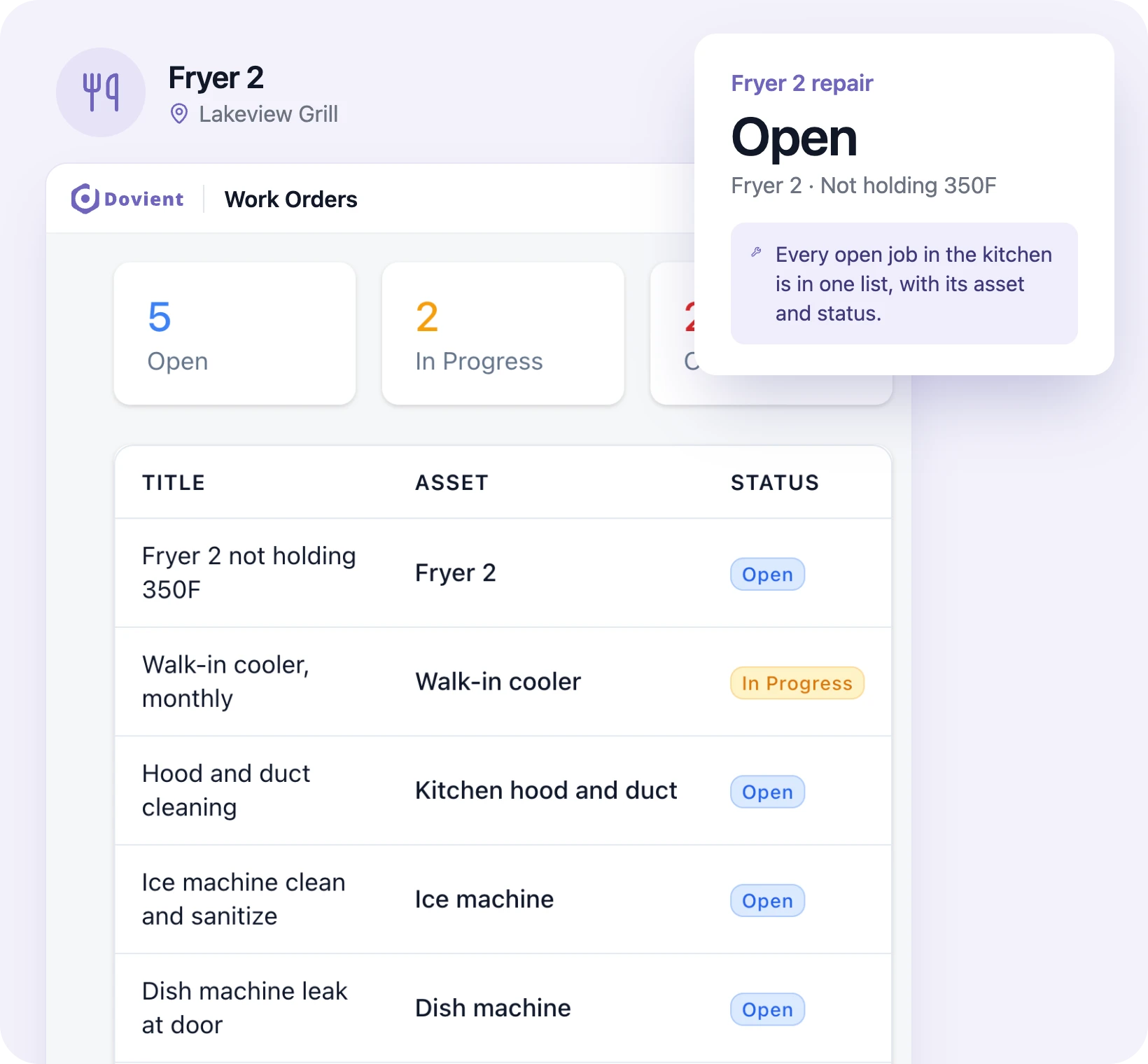
Each repair is a work order: who reported it, who is on it, the photos, the notes and the status. When the refrigeration tech or plumber finishes, the manager adds the invoice amount as a contractor charge on the work order. Overdue work shows on the dashboard.
Kitchen staff report broken equipment from the phone
A fryer won't hold temperature or the dish machine is leaking at the door. The cook picks the equipment in the app, describes the problem, adds a photo and marks it a breakdown if it's out of use. The manager is notified, turns the report into a work order, and the cook can see when it's fixed.
Ice machine cleaning and kitchen equipment PM
The ice machine gets cleaned and sanitized at the manufacturer's interval (often every six months), which is what the FDA Food Code asks for, with the water filter changed on the same visit. Fryers, the dish machine, combi oven, range and reach-ins get their own schedules. Each piece of equipment has a record with every cleaning, repair and part on it.
Commercial kitchen equipment maintenance checklistGrease trap pump-outs and the log your city asks for
Set the grease trap or interceptor pump-out as a schedule at the frequency your city or sewer district requires, monthly or quarterly for many restaurants. The hauler's manifest is attached to each completed work order with the charge, so the pump-out log is ready when the pretreatment inspector visits.
Grease trap maintenance log and inspection requirementsWhat each piece of equipment costs you
The dashboard counts breakdowns and hours of downtime, shows the average time to repair (MTTR) and time between failures (MTBF), and lists the equipment that fails most often. Next to each unit's labor, parts and contractor charges, it shows whether that 12-year-old ice machine is worth another compressor.
Records ready for the health inspector and fire marshal
Completed hood cleanings, suppression inspections, walk-in checks, ice machine cleanings and pump-outs export as a PDF with dates, names, photos and contractor reports. On inspection day you hand over the record for the dates they ask about.
Restaurant health inspection checklistHow setup works
- 1
Add your kitchen equipment
Import your hood, walk-ins, ice machine, fryers and other equipment from a spreadsheet (CSV or Excel) or add them one at a time.
- 2
Set checks and service dates
Choose the checklists each unit needs and how often: hood and suppression service, walk-in checks, ice machine cleaning, grease trap pump-outs.
- 3
Invite your managers and kitchen staff
They install the app and sign in. Cooks see the day's checks and can report problems; managers see every open repair.
Set up Dovient Lite with us
Tell us how many locations you run. We'll go through your equipment and service schedules with you and set up your account.
Prefer to start on your own? Start with Dovient Lite
Restaurant checklists and guides
All templates
Questions
What is restaurant maintenance software?
Software that keeps a restaurant's equipment service, repairs and contractor visits in one record. Dovient Lite does this for small teams: hood, walk-in, ice machine and grease trap schedules, problem reports from the kitchen on a phone, and a full history and cost for each piece of equipment.
How often does a restaurant hood need cleaning?
NFPA 96 sets the inspection frequency by cooking volume: monthly for solid fuel cooking, quarterly for high-volume operations (24-hour cooking, charbroiling, wok), every six months for moderate volume, and yearly for low volume. The system is cleaned whenever the inspection finds grease buildup. Your fire marshal enforces the edition your area has adopted.
How often does the kitchen fire suppression system need inspection?
Every six months by a trained and certified technician under NFPA 17A, with a monthly look by your own staff to check it's in place and charged. Class K extinguishers in the kitchen need a monthly inspection and annual maintenance under NFPA 10. All three can be schedules in Dovient Lite.
Will it alert me if the walk-in gets too warm?
No. Temperatures typed into a checklist are saved and marked pass or fail by the person doing the check, but Dovient Lite doesn't watch temperatures or send alarms. Use a temperature monitoring system for that, and Dovient Lite for the maintenance and repairs.
Can I track contractor visits and what they cost?
Yes. Each visit is a work order with the contractor's report attached and their charge entered as a contractor cost. Each unit's record shows every visit and the total spent on it this year.
How often should a grease trap be pumped?
Your city or sewer district sets it, usually in a fats, oils and grease (FOG) ordinance. Many use the 25 percent rule: pump before grease and solids fill a quarter of the trap's depth. They also set how long to keep pump-out records, so keep each hauler manifest with the work order.
What maintenance records will a health inspector ask for?
Health inspectors mostly check food handling, but equipment counts too: cold holding at 41F or below, a clean ice machine, a clean hood, and equipment in good repair. Requirements come from the FDA Food Code as adopted by your state or county, so check your local health department's version.
Is Dovient Lite restaurant management software?
No. It is not a POS, staff scheduling or food inventory system. Dovient Lite covers equipment, maintenance and repairs. Its parts list is for maintenance parts such as filters and gaskets, not food or supplies.
What OSHA and compliance requirements cover a commercial kitchen?
OSHA covers your staff: hazard communication for cleaning chemicals, walk-in coolers that open from the inside, and electrical and burn hazards. The fire code covers the hood and suppression system (NFPA 96 and NFPA 17A), and the health code covers food temperatures and cleanable equipment. Dovient Lite keeps the restaurant compliance records for the equipment: inspections, contractor visits and repairs.
How much does Dovient Lite cost?
Plans and prices are on the Dovient Lite pricing page: dovient.com/lite/pricing.
Reviewed
The hood, the walk-in and every contractor visit, tracked