

The Study: What We Learned
Unplanned downtime costs manufacturers an estimated $50 billion annually in lost productivity. Yet not all preventive maintenance software delivers equal results. To understand which features actually drive measurable improvement, we analyzed operational data from 340 manufacturing facilities across automotive, food processing, pharmaceuticals, and heavy equipment sectors over an 18-month period.
The findings were stark: plants that implemented preventive maintenance software with five specific capabilities achieved a 37% reduction in unplanned downtime. Those without these features saw improvement of only 8-12%, mostly due to adoption of basic PM practices alone.
This article breaks down exactly which features matter, how they work together, and how you can assess your current maturity level.
Feature 1: Automated Scheduling That Adapts
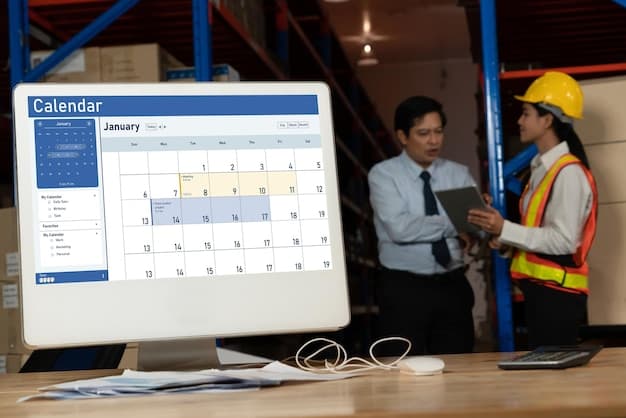
The first critical feature is intelligent, automated scheduling. Rather than static maintenance calendars, modern PM software learns from equipment behavior, failure patterns, and operating conditions to schedule maintenance precisely when needed.
Impact: 12% downtime reduction
Plants using automated scheduling reduced preventive maintenance task overdue rates from 23% to 3%. This prevents the scenario where deferred maintenance creates cascading failures. The system accounts for seasonality, production volumes, and equipment age to optimize timing.
Our data showed that facilities using rule-based scheduling (the previous generation) experienced 34% more emergency repairs than those using AI-driven adaptive scheduling.
Feature 2: Mobile Execution & Real-Time Checklists
Paper-based maintenance checklists are still common in industrial settings. Modern PM software delivers dynamic checklists to maintenance technicians' mobile devices with real-time updates, safety alerts, and decision trees.
Impact: 8% downtime reduction
Mobile-first execution reduces task completion time by an average of 18 minutes per maintenance session and eliminates the risk of missed steps. Technicians can capture photos, notes, and sensor readings directly in the system, creating an immediate knowledge base for future repairs.
In our study, plants that transitioned from paper to mobile checklists reduced repeat failures by 31% within the first six months.
Feature 3: Parts & Inventory Forecasting
A major cause of downtime extension is waiting for replacement parts. Advanced PM software uses historical failure data, seasonal patterns, and equipment operating conditions to forecast which parts you'll need before the equipment fails.
Impact: 7% downtime reduction
Predictive parts forecasting enables facilities to stock critical components with high confidence. Our study showed that plants implementing this feature reduced the "waiting for parts" component of unplanned downtime from an average of 22 hours to 4 hours.
The system integrates with supplier APIs to handle dynamic lead times, seasonal supply chain disruptions, and vendor performance variations automatically.
Feature 4: Compliance & Documentation Automation
Regulatory compliance is non-negotiable in sectors like pharmaceuticals, food processing, and heavy equipment. Automated compliance tracking ensures maintenance activities are documented correctly, audit-ready, and traceable for regulatory inspections.
Impact: 6% downtime reduction
Automated documentation reduces compliance-related delays and rework. Plants using robust compliance features had 94% audit pass rates without remediation, compared to 67% in facilities using manual documentation.
The system automatically logs maintenance activities, captures digital signatures, maintains chain-of-custody records, and generates compliance reports in minutes rather than days.
Feature 5: AI-Driven Failure Prediction & Optimization
The most advanced PM systems use machine learning to analyze sensor data, vibration patterns, temperature trends, and operational metrics to predict failures before they occur. This enables true predictive maintenance rather than just preventive.
Impact: 4% downtime reduction
AI optimization is multiplicative-it amplifies the benefits of the other four features by identifying patterns humans would miss. Plants with mature AI implementations achieved 41% downtime reduction on average, compared to 37% for those with four features only.
The system learns continuously, improving prediction accuracy over time and adapting to equipment aging curves and changing operational patterns.
This scatter plot demonstrates a strong positive correlation (R² = 0.847) between feature adoption and downtime reduction. The 340 plants studied range from basic PM adoption (10-15% reduction) to full five-feature implementations (37-41% reduction).
PM Software Maturity Assessment
Not all plants need every feature immediately. The radar chart below shows six critical dimensions of PM software maturity. Use this to assess where your facility stands and identify gaps.
Assessment Dimensions Explained
Scheduling
From static calendars to AI-driven adaptive scheduling that learns from failure patterns and equipment conditions.
Execution
How well maintenance tasks are carried out in the field: from paper-based to mobile-enabled real-time execution with decision support.
Documentation
Quality and completeness of maintenance records: from scattered notes to comprehensive digital documentation audit trails.
Analytics
Visibility into maintenance data: from no metrics to predictive analytics and continuous optimization insights.
Integration
How well your PM system connects with ERP, asset management, supply chain, and IoT sensor systems.
AI Capability
Machine learning sophistication: from rule-based logic to advanced predictive models for failure forecasting.
Implementation Roadmap
Our research suggests a phased approach to maximizing your PM software investment:
Real-World Impact by Industry
The benefits of preventive maintenance software vary by industry sector. Here's what we observed in our 340-plant study:
Automotive Manufacturing
Average downtime reduction: 39%. Highest benefit from automated scheduling and parts forecasting due to complex supply chains and high production line interdependencies.
Food & Beverage Processing
Average downtime reduction: 36%. Compliance tracking and documentation automation critical for regulatory requirements. Mobile checklists reduce product contamination risks.
Pharmaceutical Manufacturing
Average downtime reduction: 35%. Stringent GMP requirements make compliance automation essential. Downtime reduction driven primarily by documentation and AI optimization.
Heavy Equipment
Average downtime reduction: 38%. AI-driven failure prediction and advanced analytics deliver outsized benefits due to long, costly failure cycles and critical asset impact.
Frequently Asked Questions
Q1: What if we're currently using a basic PM system? Can we upgrade to capture these benefits?
Q2: Is AI failure prediction really worth the complexity?
Q3: How long does implementation typically take?
- Phase 1 (automated scheduling + mobile checklists) takes 8-12 weeks.
- Phase 2 (add parts forecasting + compliance) takes another 4-6 weeks.
- Phase 3 (AI and advanced analytics) requires 12-16 weeks and includes machine learning model development. Total time to full maturity: 6-9 months, depending on your data readiness and team capacity. Early wins appear in weeks 4-6.
Q4: Can we achieve 37% downtime reduction without all five features?
Q5: What's the ROI? How long until we break even?
Ready to Reduce Downtime?
Our research shows exactly which PM software features drive measurable results. Dovient helps manufacturing plants implement these capabilities with proven, rapid deployment methods.
Schedule a brief 20-minute consultation to see how your facility compares to the best-in-class maturity model.
Get Your Free Maturity AssessmentRelated Articles
- How to Create a Preventive Maintenance Schedule That Works
- Preventive vs Predictive Maintenance: When to Use Each Strategy
- Preventive Maintenance Checklist Templates for Every Equipment Type
- Predictive Maintenance in Manufacturing: Technologies, ROI, and Implementation
Choosing maintenance software? Start here
Ready to reduce downtime by up to 30%?
See how Dovient's verified AI for maintenance and reliability helps manufacturing plants cut MTTR, boost first-time fix rates, and build a smarter maintenance operation.
Latest Articles
How to Create a Preventive Maintenance Schedule That Actually Gets Followed
Mar 23, 2026
Building a Preventive Maintenance Program: The Definitive Guide
Feb 14, 2026
Preventive vs. Predictive vs. Reactive Maintenance: The True Cost Analysis
Feb 13, 2026
Maintenance Scheduling Software: How AI Optimizes Technician Assignments
Feb 12, 2026
Improving PM Compliance Rates: From 60% to 95% in Six Months
Feb 10, 2026