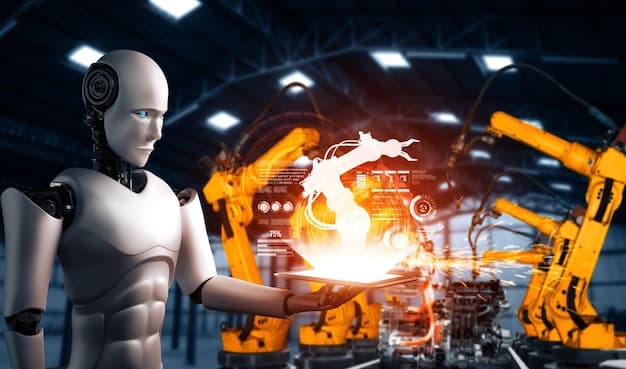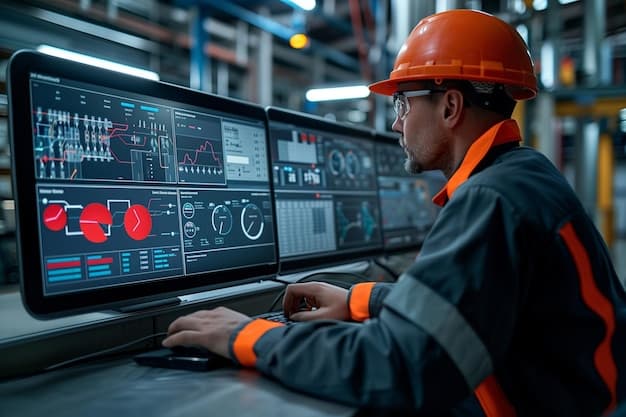
AI in manufacturing maintenance isn't coming. It's here. And it's fundamentally changing how plants operate.
In 2024-2025, the first wave of AI-powered maintenance platforms proved themselves in real plants: 35% downtime reduction, 40% faster MTTR (Mean Time To Repair), 99.2% diagnosis accuracy, sub-6-month payback periods. By 2026, AI-powered maintenance is moving from "innovative differentiator" to "table stakes"-the baseline expectation for competitive operations.
The Shift From Prevention to Intelligence
2010-2020: Prevention
Schedule maintenance before failures occur. CMMS systems (SAP, Maximo, MaintainX)
Benefit: Fewer surprises, better planning
2020-2025: Prediction
Use sensors + data science to predict failures. IoT sensors, machine learning models
Benefit: Maintenance before failures
2026+: Intelligence
AI learns your plant's troubleshooting expertise. LLMs + domain-specific training
Benefit: Real-time expert guidance
Key Technologies Behind AI Maintenance in 2026
1. Large Language Models (LLMs) for Maintenance Context
AI trained on billions of words to understand human language and context. Adapted specifically for maintenance scenarios. Technician says "Pressure dropping on hydraulic line, temperature normal." LLM understands: This is a maintenance issue, these are equipment parameters, these symptoms have known causes. Returns diagnostic decision tree in 90 seconds.
Why it matters: Technicians don't need to know technical terminology. Works with natural language ("the pump sounds weird"). Understands your plant's specific equipment and procedures.
2. Knowledge Graph Systems
Databases that understand relationships between equipment, failures, causes, and solutions. Equipment A connects to Component B → Common failures → Solutions. Creates a web of relationships that AI can navigate.
Why it matters: Captures not just facts, but relationships. Enables reasoning (not just pattern matching). Improves with every repair documented.
3. Computer Vision for Equipment Inspection
AI that can look at equipment images and detect abnormalities. Camera inspects bearing: "Brown fluid indicates bearing wear." Thermal imaging: "Hot spots indicate developing failure." Visual inspection: "Rust pattern suggests imminent failure."
Why it matters: Detects developing problems before they become failures. Reduces inspection time. More consistent than human inspection.
4. Predictive Analytics + Real-Time Sensors
IoT sensors continuously monitor equipment. ML models predict when failures will occur. Vibration sensor detects bearings wearing. Temperature sensor shows gradual increase. ML model: "Based on these patterns, bearing will fail in 4-5 days." Maintenance scheduled before failure.
Why it matters: Prevents unplanned downtime. Allows planned maintenance (cheaper than emergency repair). Reduces catastrophic failures. Cost: Sensors $500-$5,000 per equipment. ML models $10K-$50K. Annual operation $5K-$20K.
Use Cases: Where AI Adds Value in Maintenance
Use Case 1: Real-Time Troubleshooting (Highest ROI)
Equipment fails unexpectedly. Technician must diagnose fast but doesn't know where to start. AI solution: Technician describes symptom → AI returns diagnostic decision tree → MTTR drops 25-40%.
Time Saved: Manual diagnosis 20-30 minutes → AI-assisted 3-5 minutes. Per failure: 15-25 minutes saved. Across 100+ failures/year: 25-40 hours of recovered time.
ROI: Typical implementation cost $20K-$40K. Time value recovered $100K-$300K/year. Payback: 2-5 months. Example: A 200-technician plant with $5,000/hour downtime cost sees 150 failures/year × 20 min saved × ($5,000/60) = $250K/year savings
Use Case 2: Knowledge Preservation (Strategic)
Expert technician retiring. 30 years of knowledge walking out the door. AI solution: Capture expert's troubleshooting approach in AI system. When they leave, knowledge stays.
Impact: New technician ramp time 5 years → 1.5 years. Repeat failures -40%. Knowledge doesn't disappear when staff turns over. One Fortune 500 manufacturer calculated: 10 expert technicians retiring in next 3 years. Each represents $500K-$1M in institutional value. Using AI to capture knowledge before they leave: $75K investment saving $5M+
Use Case 3: Predictive Maintenance (Prevents Failures)
Equipment fails, causing unplanned downtime. You want to prevent failures before they occur. AI solution: Sensors monitor equipment. ML models predict failures 5-10 days in advance. Schedule maintenance before failure.
Impact: Prevents unplanned downtime entirely. Maintenance becomes planned (cheaper). Equipment lasts longer. ROI: Prevents emergency repairs (30-40% cost savings vs. reactive). Prevents production loss ($10K-$100K per prevented failure). Payback: 6-18 months depending on failure frequency.
Use Case 4: Training Acceleration (Retention)
New technicians take 3-5 years to become fully productive. Many leave in frustration. AI solution: New hires get expert-level guidance from day one. They learn faster, stay longer, perform better.
Impact: New hire ramp 5 years → 1.5-2 years. Retention +30%. Technician confidence +45%. Performance variance -50%. ROI: Reduce turnover cost $40K-$100K per prevented departure × 3-5 retained staff/year = $120K-$500K/year. Faster ramp = more productive technicians = $30K-$100K/year. Payback: 1-2 months.
Implementation: How to Deploy AI in Your Plant
Phase 1: Assessment (Week 1-2)
Evaluate current state: What's your current MTTR? Downtime cost per hour? Which equipment fails most frequently? Where is knowledge at highest risk? Use our ROI Calculator to estimate your potential savings. Define success metrics: Target MTTR improvement (typically 25-40%), target downtime reduction (typically 15-25%), target implementation time (4-6 weeks), target ROI timeline (4-6 month payback).
Phase 2: Choose Your Approach (Week 2-3)
Option A: AI Troubleshooting (Fastest ROI) - Focus on real-time technician guidance with our AI Copilot. Implementation 2-4 weeks. Cost $15K-$40K. ROI 2-5 months. Best for: Plants with high failure frequency, high downtime costs.
Option B: Predictive Maintenance (Prevents Failures) - Focus on predicting failures before they occur. Implementation 4-12 weeks. Cost $30K-$100K+. ROI 6-18 months. Best for: Plants with expensive equipment, predictable failure patterns, budget for sensors.
Option C: Both (Complete Solution) - Prevent failures + respond faster. Implementation 6-12 weeks. Cost $50K-$150K. ROI 4-8 months. Best for: Manufacturing leaders wanting comprehensive maintenance transformation.
Phase 3: Implementation (For AI Troubleshooting)
Week 1 - Knowledge Gathering: Collect equipment manuals and SOPs. Extract repair history from CMMS. Interview experts about troubleshooting logic. Document procedures for top 20 failures.
Week 2 - System Setup: Select AI platform (try our demo). Feed documentation and repair history into system. Configure for your specific equipment. Set up integration with CMMS.
Week 3 - Training: Train technicians (typically 1 hour, platform is intuitive). Create guides for common scenarios. Set up feedback loop.
Week 4 - Go Live: Pilot with one team or shift. Monitor MTTR improvements. Gather feedback. Expand to full workforce.
Expected ROI: Real Numbers
Scenario 1: Mid-Market Plant (200 technicians, $50M revenue)
Current state: 18% downtime. MTTR 65 minutes. 150 unplanned failures/year. Downtime cost $4,000/hour.
Investment: $30K (Year 1)
Expected Results: Downtime 18% → 14% (4% improvement). MTTR 65 min → 42 min (35% improvement). Annual downtime savings $800K. Knowledge preservation value $200K. Total Year 1 benefit $1M. Payback period: Less than 2 weeks. Year 1 ROI: 3,200%
Scenario 2: Large Plant (500 technicians, $150M revenue)
Current state: 16% downtime. MTTR 70 minutes. 400 unplanned failures/year. Downtime cost $8,000/hour.
Investment: $140K Year 1 (predictive maintenance + AI troubleshooting)
Expected Results: Downtime 16% → 10% (6% improvement). MTTR 70 min → 40 min (43% improvement). Annual downtime savings $2.4M. Knowledge preservation $500K. Predictive benefits $400K. Total Year 1 benefit $3.3M. Payback period: Less than 2 weeks. Year 1 ROI: 2,357%
The 2026 Outlook: Where This Is Heading
By End of 2026: 35-40% of manufacturers will have AI troubleshooting in place. 60%+ of large manufacturers will have predictive maintenance. AI-assisted maintenance will be baseline competitive expectation. SAP/Maximo will continue adding AI capabilities. Standalone AI platforms will proliferate.
By End of 2027: AI troubleshooting will be expected standard. Second-wave improvements will focus on cross-plant knowledge sharing, autonomous repair recommendations, supply chain integration, and predictive quality.
By 2028: Manufacturing plants without AI-assisted maintenance will be at competitive disadvantage. Hybrid human-AI maintenance will be the standard. The remaining question won't be "Should we use AI?" but "How do we maximize its value?"
Getting Started: Your Next Steps
This Week:
- Calculate your downtime cost ($/hour)
- Identify your top 10 failures (which cost you the most)
- Review your CMMS repair history (what data do you have?)
- Interview your experts (what knowledge is at risk?)
This Month:
- Document top 5 troubleshooting procedures
- Evaluate AI platforms (request demos from 2-3 providers)
- Assess technician readiness (are they ready to adopt new tools?)
- Budget for Year 1 ($15K-$50K typical for mid-market)
Next Quarter:
- Pilot AI troubleshooting with one team or shift
- Measure MTTR improvement (expect 25-40% in first 90 days)
- Measure adoption (track usage, identify barriers)
- Calculate ROI (confirm payback timeline)
- Decide on full rollout vs. iteration
Conclusion: The Future Is Now
AI in manufacturing maintenance isn't coming in 5 years. It's here in 2026. The manufacturers already deploying it are seeing 35% downtime reduction, 40% faster repair times, knowledge preservation during generational transitions, technician confidence and retention improvements, and 200-500% Year 1 ROI.
The question isn't whether to adopt AI in maintenance. It's when you'll start, and whether your competitors beat you to it.
If your plant is losing $100K-$1M annually to unplanned downtime, AI-powered maintenance could save half of that within 90 days. The investment? Typically recovered in 1-3 months.