
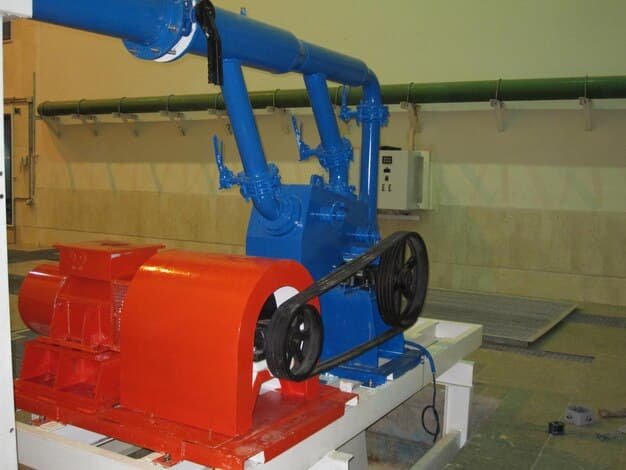
GE Vernova GE D / H Class at a glance
The Dovient library currently covers 3 published troubleshooting guides for the GE Vernova GE D / H Class, with 18 individual procedure steps distilled from OEM manuals and field experience. On average, a fix on this machine runs 6 steps and roughly 1.5 hrs on tools. Complexity is classified as expert-only, most procedures here involve safety-critical steps, specialised tooling, or OEM-only spares, and should not be attempted without proper training.
Failure modes to watch for
Every guide in the GE Vernova GE D / H Class library lists the candidate root causes its procedure rules out. These are the distinct failure modes we've documented so far, a useful starting point if you don't yet know which specific alarm or symptom you're chasing.
Silica carry-over from the boiler depositing in the high-pressure blade path as steam expands
Sodium or chloride contamination from condenser leaks or poor boiler water chemistry
Reduced steam purity during load transients that exceed the boiler's separation capability
Long intervals between steam blows during start-up allowing loosely-bonded deposits to accumulate
Gland steam regulating valve set too high, forcing steam out through the outer seal rings to atmosphere
Gland condenser exhauster fan not running, allowing steam to escape rather than be drawn in
Worn or eroded seal labyrinth clearances allowing more leakage than the system can handle
Gland steam supply pressure fluctuating with load, requiring regulator re-tuning
Tools you'll need most
These tools are referenced most often across the GE Vernova GE D / H Class troubleshooting guides. If you service this equipment regularly, keep them on the cart.
Sources we cite for this machine
Every procedure on Dovient is cross-checked against published sources. These are the references cited most often in the GE Vernova GE D / H Class guides.
- cited 3×
GE Vernova GE D / H Class Steam Turbine general technical documentation
GE Vernova
Every published guide for this machine
How to diagnose blade path deposits and performance deterioration on a GE Vernova GE D / H Class steam turbine
A gradual heat rate increase with no load change is almost always silica or sodium deposition on turbine blades. Check steam chemistry and compare blade path pressure ratios to baseline.
How to diagnose gland steam seal leaks on a GE Vernova GE D / H Class steam turbine
Steam or vapor at the shaft seals with falling condenser vacuum usually means the gland steam regulator is set too high or too low, or the gland condenser exhauster fan has failed. Check the regulator setpoint and exhauster first.
How to correct high vibration from slow-roll rotor bow on a GE Vernova GE D / H Class steam turbine
A 1x vibration that is high on roll-off but decreases with time is almost always a thermal rotor bow from cooling unevenly on the turning gear. Do not attempt to rush the start. Continue slow roll until eccentricity returns to normal limits before accelerating.
Frequently asked questions
What are the most common GE Vernova GE D / H Class problems?
The most frequently reported issues on the GE Vernova GE D / H Class include how to diagnose blade path deposits and performance deterioration on a ge vernova ge d / h class steam turbine, how to diagnose gland steam seal leaks on a ge vernova ge d / h class steam turbine, how to correct high vibration from slow-roll rotor bow on a ge vernova ge d / h class steam turbine. Each has a step-by-step troubleshooting guide on this page.
How long does a typical GE Vernova GE D / H Class repair take?
Repair time depends on the failure mode. Routine adjustments typically take 30-90 minutes; component replacements run 2-4 hours; major overhauls can take a full shift or more. The procedures linked above list estimated time per problem.
Can these procedures be done by an in-house technician?
Most procedures on this page are designed for a qualified in-house maintenance technician with the listed tools and parts. Procedures requiring OEM-only access (firmware updates, factory calibration) are flagged in the safety warnings.
Are these guides verified against OEM documentation?
Every procedure cites the source manuals, service bulletins, or published references it draws from. The GE Vernova GE D / H Class guides cross-check against 1 source(s) cited above.
Images on this page sourced from Freepik. Credits: thelizton, todayinfographic.