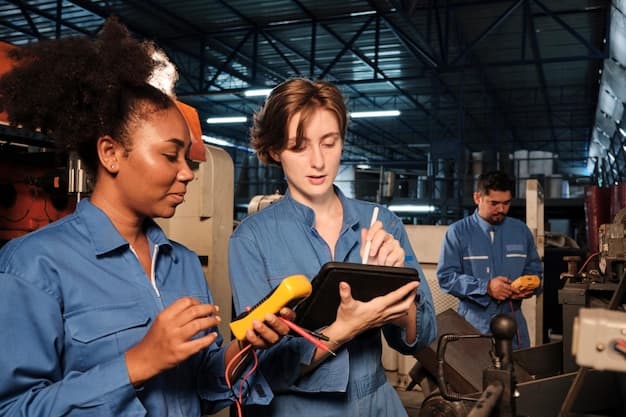
Sarah has worked at the plant for 28 years. When Equipment A fails, Sarah can diagnose it in 15 minutes. When a hydraulic pressure sensor acts weird, Sarah knows exactly what it means. When the production line makes an unusual sound, Sarah hears something others miss.
This year, Sarah is retiring. In two months, her knowledge walks out the door. And your plant doesn't have a plan for it. This is tribal knowledge in manufacturing-the accumulated expertise of experienced technicians that lives in their heads, not in your systems.
When Sarah leaves, your plant loses: 28 years of troubleshooting experience, dozens of undocumented workarounds, the ability to diagnose complex failures quickly, and institutional memory about equipment quirks and patterns.
Most manufacturing plants treat this as inevitable. It's not. The manufacturers winning in 2026 are the ones capturing tribal knowledge before experienced staff retire.
What Is Tribal Knowledge?
Tribal knowledge is expertise that exists in the minds of experienced employees but isn't documented in systems, manuals, or processes. It's accumulated through experience, not formally documented, difficult to transfer, and has high business impact.
Examples include: "Equipment A always acts this way before it actually fails-you can hear it in the pump sound." "If the pressure drops below 200 PSI, bypass the sensor check; the reading is probably stuck." "When the conveyor makes that grinding noise, it means the bearing is shot; don't wait, replace it." Each of these pieces of knowledge represents thousands in downtime prevention or faster repairs.
The Cost of Losing Tribal Knowledge
When experienced technicians leave, downtime increases dramatically. Immediate costs include slower diagnosis time, more errors as new technicians try things that don't work, higher repair costs from replacing parts instead of fixing them, and extended downtime on every failure.
Long-term costs include repeat failures without knowing the root cause, safety risks as new technicians don't know danger zones, lost institutional memory about equipment design decisions, and talent exodus as junior staff get frustrated and leave too.
The Numbers: For a 200-person facility losing two senior technicians per year: Lost MTTR improvement of 30% slower troubleshooting = 60 hours per failure × 100 failures/year = 6,000+ hours lost productivity annually. Over 5 years, 10 experienced technicians leave, representing 200-300 years of combined expertise vanished.
Why Tribal Knowledge Matters Now More Than Ever
- Accelerated Retirement Wave: The manufacturing workforce is aging. Technicians hired in the 1980s-90s are retiring now. The knowledge drain is real and accelerating.
- Supply Chain Complexity: Modern equipment is more complex. Problems are more nuanced. Tribal knowledge about how your specific equipment behaves is more valuable than generic training.
- Equipment Uniqueness: Your plant's equipment isn't stock. It's been modified and adapted over 20+ years. Nobody but your senior technicians understand these unique configurations.
- Skilled Labor Shortage: Finding replacement technicians is hard. When experienced staff leave, you can't just hire someone with 20 years of knowledge.
- Competitive Pressure: Your competitors are capturing tribal knowledge. If you don't, you're at a disadvantage.
How to Identify Tribal Knowledge
Step 1: Analyze Your Failure Data - Look at repair logs. Which equipment fails most often? Who fixes it? Calculate MTTR by technician. Does Sarah fix failures 50% faster than average? Identify high-value knowledge that directly impacts MTTR.
Step 2: Interview Your Senior Staff - Ask "What's the most important thing you've learned that nobody ever taught you?" "What do you do differently than the manual says? Why?" "What equipment behaviors worry you?" "What's the biggest mistake you see newer technicians make?"
Step 3: Observe - Watch your senior technicians work. Note the decisions they make quickly (that's knowledge in action). Ask "Why did you do that?" when they make non-obvious choices. Document the patterns.
Step 4: Map Knowledge by Impact - Create a matrix showing each knowledge area, its impact (High/Med/Low), difficulty to transfer, and who holds it. Focus on "High Impact, High Difficulty" knowledge first-that's where the risk is greatest.
Method 1: Structured Documentation
Systematically capture tribal knowledge in written, visual, and procedural formats. Work with the expert to document it step-by-step using troubleshooting flowcharts, Standard Operating Procedures (SOPs), visual job aids, video documentation, and checklist cards.
Have a junior technician follow the documented process. Refine based on feedback until someone could follow it without the expert. Time required: 1-2 hours per high-impact knowledge area.
Method 2: Mentorship and Shadowing Programs
Pair junior technicians with experts for extended observation and hands-on learning. Structure for 6-12 weeks with 2-3 days per week of observation and hands-on work under supervision. Create knowledge checkpoints at Week 2, 4, 8, and 12 to validate learning.
Captures subtle knowledge that's hard to document and builds relationships and confidence. Disadvantage: Takes 100-200 hours per junior technician per knowledge area.
Method 3: Reverse Engineering Past Repairs
Analyze past repair logs and maintenance history to understand the logic behind how your experts solve problems. Pull repair history for top 20 failures. Interview experts about why they chose specific fixes. Build diagnostic flowcharts based on patterns.
Uses data that already exists and is grounded in real solutions. Time required: 2-4 hours per major failure type.
Method 4: Cross-Training at Scale
Systematically train multiple juniors in the same knowledge areas to build redundancy and prevent single-point-of-failure. Identify knowledge bottlenecks. Select 2-3 junior technicians for each knowledge area. Combine documentation and shadowing. Create simple certification.
Builds redundancy and multiple perspectives on the same knowledge. Time required: 150+ hours per junior technician per knowledge area.
Method 5: AI-Powered Knowledge Capture & Digitization
Use AI to automatically learn from your expert's decisions and digitize their troubleshooting approach. Gather existing knowledge (SOPs, equipment manuals, past repair logs). AI learns your process and decision logic from past repairs. AI continuously learns as technicians use it. Experts review recommendations to refine the model. Scale to all technicians who now have access to expert-level troubleshooting.
Real-World Example: A plant uploads 40 years of manuals and 500 past repair logs into Dovient's MissingDots AI. The AI learns typical failure patterns, diagnostic sequences, and symptom-to-cause relationships. Now technicians ask "Pressure dropping on Equipment A?" and instantly get expert-level guidance in 90 seconds. Advantages: Captures knowledge at scale, improves over time, accessible to all technicians simultaneously, doesn't retire when the expert does. Learn how we do this in our How Dovient Works guide. Implementation: 2-4 weeks. Cost: $29-$69 per technician per month. ROI Timeline: 4-6 months.
Integrated Approach: The Complete Tribal Knowledge Strategy
The most effective plants use all five methods together, each serving a different purpose:
Timeline:
Month 1: Identify & Document (Interview senior staff, create troubleshooting flowcharts, document top 10 failures). Cost: ~$5K
Months 2-3: Mentorship Launch (Pair juniors with experts, begin cross-training, first certifications). Cost: ~$20K
Months 2-4: Reverse Engineer (Analyze past repairs, build diagnostic flowcharts, validate with experts). Cost: ~$8K
Months 3-6: AI Implementation (Deploy AI troubleshooting platform, feed it your knowledge, train technicians). Cost: ~$30K Year 1
Ongoing: Continuous Improvement (New knowledge captured into AI, juniors mentored, documentation updated)
Total Year 1 Cost: ~$60-$80K. Annual Value: MTTR improvement 25-40%, avoided downtime $200K-$1M+, reduced repeat failures $50K-$200K, improved technician retention $20K+. Total Year 1 ROI: 200-500%
Case Study: How One Plant Preserved 30 Years of Knowledge
A large automotive supplier faced the retirement of their top technician (33 years with company) who handled 60% of complex equipment failures. They implemented a comprehensive knowledge capture program:
Results 6 Months After Handoff: MTTR on complex failures improved from 60 to 40 minutes (33% improvement). 3 technicians now independently handle equipment. Knowledge preserved and accessible to all. New technicians get expert guidance immediately. Zero downtime from knowledge loss.
Cost Benefit: Year 1 investment $75K. Avoided downtime from knowledge loss $500K+. MTTR improvement savings $200K+. Net Year 1 ROI: +400%
Immediate Action Plan
- Day 1: List your top 3 most valuable technicians. What do they know that nobody else knows? What would happen if each left tomorrow? Check our Troubleshooter tool to start documenting their knowledge.
- Day 2: Schedule 1-hour interviews with each expert. Ask about their most valuable knowledge.
- Day 3: Start documentation. Pick the top 1-2 failures each expert handles. Create a simple troubleshooting flowchart.
- Day 4: Plan your approach. Decide which methods you'll use (Documentation + Shadowing + AI is common).
- Day 5: Communicate. Tell your team this is a priority and explain why.
Conclusion: Make Knowledge an Asset, Not a Risk
Tribal knowledge is your manufacturing plant's hidden intellectual capital. Right now, it's sitting in the heads of experienced technicians. It's at risk.
By capturing tribal knowledge through documentation, mentorship, reverse engineering, cross-training, and AI digitization, you can preserve 30 years of expertise in your systems, accelerate junior technicians from 5-year learning curves to 1-year competency, improve MTTR and downtime immediately, reduce turnover, and build competitive advantage. Start with our Academy to build a learning culture, then see how a manufacturing knowledge management platform ties it all together.
The manufacturers winning in 2026 treat knowledge as a strategic asset, not a hope-for-the-best gamble. Your expert is retiring. Make their last gift to your plant be 30 years of preserved expertise.